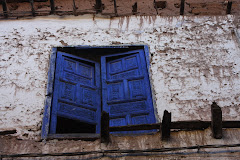
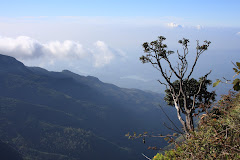
On Peru's airline, LAN, Carolee and I flew from LAX to Lima. Beth flew in to Lima from Miami on American. We met at the hotel Leon de Oro in the Miraflores distsrict of Lima, the designated meeting place for our Intrepid tour group. After a meet and greet--our group of twelve + one tourguide ranged in age from thirteen to seventy, three of us from the USA, two from New Zealand, seven from Australia, and tourguide Claire from England--and then an introductory briefing, our tour officially began Sunday afternoon, June 21, in Miraflores' main square, La Plaza de Armas.
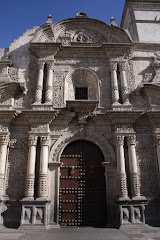
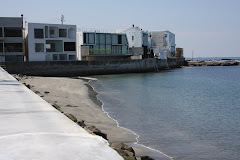
Miraflores (Lima)


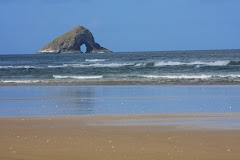
From Lima, the next morning we drove to Paracas and took a boat to the Ballestas Islands, "the poor man's Gallapogas."


That afternoon we rode dune buggies and sandboarded on towering sand dunes near the oasis of Huacachina.

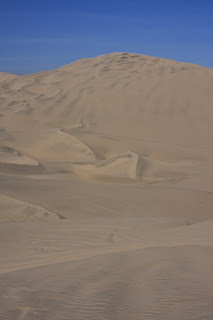
From the sand dunes we headed to Nazca for the night.

Then, the next morning we viewed the Nazca Lines--one of the world's most mysterious archaeological sites--by air. (The plane I rode in held a pilot and five passengers.) This one is one of my favorites, the monkey.

And here is the hummingbird:

The following day we continue our drive down Peru's desert coastline to Puerto Inka. Here are Darci and Beth relaxing in hammocks situated above the beach.

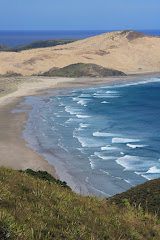
 A gorgeous beach but one cold ocean (Humboldt Current); plus, June is winter in the southern hemishpere.
The following day we continued the journey to our next destination, Arequipa; as cities go, this one tied with Iquitos as a favorite for me.


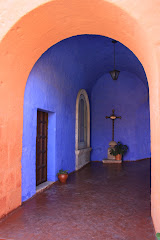
 Monasterio de Santa Catalina (a nunnery, actually) in Arequip--absolutely stunning use of line, shape, color, and landscaping.
From Arequipa we turned inland toward the Andes.


Here is our first view of Lake Titticaca at the archaeological site of Sillustani just outside of Puno.

One of the floating island villages--built on reeds--in Lake Titticaca.

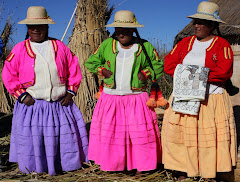
Taquile Island in Lake Titticaca, an island we visited where knitting is strictly a male domain and women do the spinning.

Next, Cusco:


Machu Picchu


The Sacred Valley: first Ollantaytambo, a living Inca village. Ancient ruins design two surrounding mountainsides.


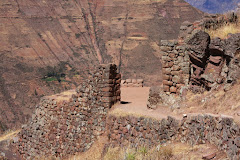
The Sacred Valley: Pisac--an important farming area for the Incas. These ruins stand above the current village of Pisac down in the river valley.

A weaving village we visited in the high country above the Sacred Valley.


The Intrepid tour ended back in Lima, Sunday, July 5. That evening Carolee and I set out on our own for an Amazon adventure when we flew to Iquitos--an Amazon River town arrived at only by boat or air. The next morning we boarded a boat and then we spent four days at a lodge further down river in the Amazon jungle.
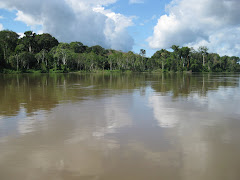
The Amazon is way muddy, astonishingly wide, and achingly beautiful.

For our last two days in Peru we returned in Iquitos.


Here's the market in Belen, a floating village now encompassed by Iquitos:

Miraflores (Lima)


From Lima, the next morning we drove to Paracas and took a boat to the Ballestas Islands, "the poor man's Gallapogas."


That afternoon we rode dune buggies and sandboarded on towering sand dunes near the oasis of Huacachina.


From the sand dunes we headed to Nazca for the night.

Then, the next morning we viewed the Nazca Lines--one of the world's most mysterious archaeological sites--by air. (The plane I rode in held a pilot and five passengers.) This one is one of my favorites, the monkey.

And here is the hummingbird:

The following day we continue our drive down Peru's desert coastline to Puerto Inka. Here are Darci and Beth relaxing in hammocks situated above the beach.

 A gorgeous beach but one cold ocean (Humboldt Current); plus, June is winter in the southern hemishpere.
The following day we continued the journey to our next destination, Arequipa; as cities go, this one tied with Iquitos as a favorite for me.


 Monasterio de Santa Catalina (a nunnery, actually) in Arequip--absolutely stunning use of line, shape, color, and landscaping.
From Arequipa we turned inland toward the Andes.


Here is our first view of Lake Titticaca at the archaeological site of Sillustani just outside of Puno.

One of the floating island villages--built on reeds--in Lake Titticaca.

Taquile Island in Lake Titticaca, an island we visited where knitting is strictly a male domain and women do the spinning.

Next, Cusco:


Machu Picchu


The Sacred Valley: first Ollantaytambo, a living Inca village. Ancient ruins design two surrounding mountainsides.


The Sacred Valley: Pisac--an important farming area for the Incas. These ruins stand above the current village of Pisac down in the river valley.

A weaving village we visited in the high country above the Sacred Valley.

The Intrepid tour ended back in Lima, Sunday, July 5. That evening Carolee and I set out on our own for an Amazon adventure when we flew to Iquitos--an Amazon River town arrived at only by boat or air. The next morning we boarded a boat and then we spent four days at a lodge further down river in the Amazon jungle.
The Amazon is way muddy, astonishingly wide, and achingly beautiful.


For our last two days in Peru we returned in Iquitos.
Here's the market in Belen, a floating village now encompassed by Iquitos:

 Basically, while within the interior of a cushioned ball--along with some water to enable sliding and sloshing--one rolls down this hill!
 That's Jalayne inside the ball at the far right.
 At the bottom, the guys ready and waiting to assist Jalayne when she emerges.
 Jalayne and I--ready for our second run.
 Looking down from the lift at two of the paths.