Mid-June Carolee will come to Seoul, and Carolee will stay with ME!
Do you know that the last time anyone came to visit and stay with me at my house was Christmastime, 2003...and it was Carolee! To more accurately visualize the timeline, in 2003 I still lived in Germany; I didn't move to Japan until the summer of 2005.
For five years I lived in Japan, and, besides me and the landlords (who lived next door, mind you), only FIVE people ever even gazed upon the interior of my home: two friends from church who brought me food when I returned from the hospital after my appendicitis, a colleague who lived down the street and rented from the same landlords, and--wait for it--Carolee! (She spent a few hours in Yokosuka with me when her architecture class "field trip" to Japan was checking out Tokyo, and she wanted to see my house.) Granted, a serious deficit in available parking curtailed all sorts of regular or spontaneous home visiting during my residence in Japan, and, due to lack of interest and a true absence of skills, I rarely cook; hence, I even more rarely entertain!
Furniture-wise, I downsized dramatically before moving to Japan. I arrived sans couch, love seat, or dining table. I brought only one bed, planning to buy another before anyone come to visit. Well, as mentioned previously, no one came to visit and I never bought another bed!
Until I moved to Korea, that is. As of last October, I have two beds again.
However, the more grievous issue with regard to a dearth of visitors has been my "denial" rooms. (At my last abode in Germany, I had a "denial" basement--a true horror of horrors!) My last four residences have all had at least one room jammed with stacked boxes and sundry pieces of acquired clutter. I have fully intended to sort and organize and discard as needed for like ten years now. But the intention has remained highly nebulous without sufficient motivation to fully focus it within the trajectory of my energy. That is where your visit could have made all the difference at an earlier juncture of the scope and sequence of my life!
Alas, my apartment here in Korea has had two rooms fully arrayed in "denial," albeit, I plead some mercy on my behalf since one of the rooms holds mostly the stuff that usually has lodged in my school classroom. (This year I just never fully moved into the school classroom, which is just as well, because this week I learned I will change classrooms for next year.) But, with Carolee's pending visit rapidly approaching, I determined to annex at least one of those rooms into the domain of accessible. With major chunks of the last week devoted to the endeavor, I have achieved success.
What a venture, though, one requiring a full court press, I must confess. I have shredded all the financial records spanning the years from my marriage (and I have now been a Cahoon longer than I ever was a Hatch!) up to the most current seven years--which I hope is the right number, and not ten, but I totally succumbed to a shredding frenzy. I have discarded all the college notes that either Mike or I had saved from our undergraduate years, although I salvaged our more personally creative written endeavors. I uncovered a myriad of separate stashes of exercises/workout routines ripped from either Shape or Runner's World with an occasional recipe--one that at least in theory I might actually prepare--mixed in. Those are now properly sorted and stored or else discarded. I reviewed and repacked my 72-hour-kit. I culled my travel files, added folders--Japan and Korea, for example--and then catalogued an assortment of stuff collected, at this point, from all the continents except Antarctica! All the random poems and quotes I clip or copy now abide in separate boxes for organization at a later date. All my own poetry--the first ones written the year I was an English major at the University of Utah--I have collected together in one place for the first time ever. I also rediscovered the hard copy of the once-begun novel and rejoined it with the file and envelopes of notes, descriptions, and lines written in the interim. Lots of letters and photographs certainly require more attention, but I know where they are and can access them easily at this point.
So, if Carolee's imminent visit catalyzed the dismantling of one "denial" room, perhaps another visit by someone else could mean the end of all "denial" rooms . . . at least for me! Please do come visit any time!
Monday, May 30, 2011

Saturday, May 21, 2011
NEO Exercise
 |
Are you intrigued yet?!
The drill began Thursday afternoon and runs through Sunday evening. At some point during that time frame, all non-combatants connected to Yongsan Garrison must assemble at a certain gym on base, provide required documents and information, learn/review the regs and procedures, and "practice" how to evacuate. Thursday evening after dinner at the Navy Club with my colleague Kari, the two of us commenced our NEO Drill participation. Almost two hours later, we finished--our names on all the correct lists and the requiste knowledge and practice at least visiting the short-term memory zone of the brain. It was an interesting experience, I shall confess, and definitely illuminating, as well. May all my departures from Korea be by choice and at my discretion!
________________________________________________
And now, a lesson in how to wear a gas mask...should you ever need to know:
[By the way, this guy is even better looking than the guy who performed the demonstration for us during our gas mask briefing!]
|


Wednesday, May 18, 2011
Ireland, part 2
I am a brother to dragons and a companion to owls.
Job 29:29
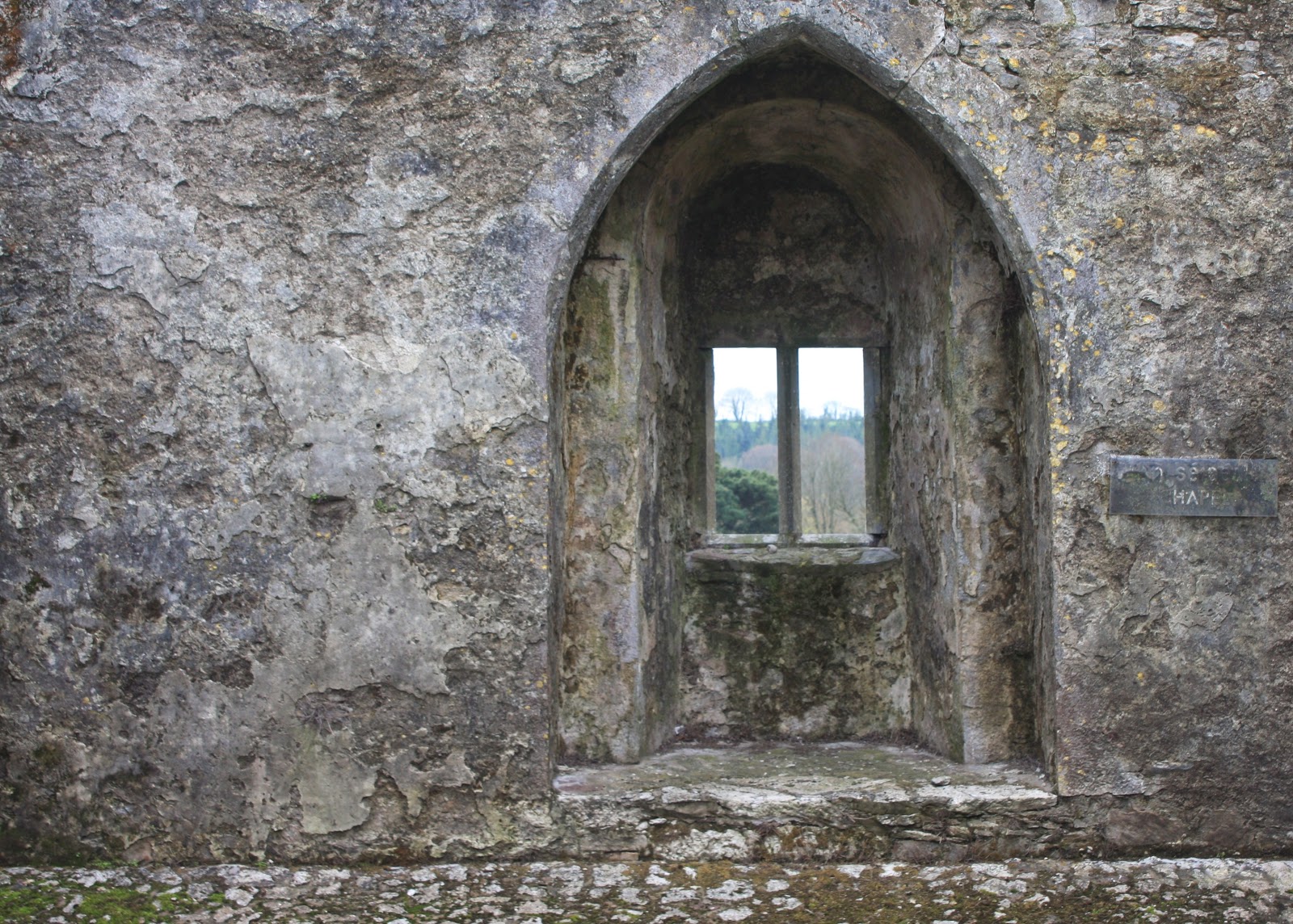
In Ireland, there are moments and places that transport me through time and space. Sometimes I journey into a past I never lived, and sometimes I wander somewhere that never really was. It is all good, though--somehow part of the Irish magic.

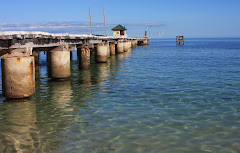
County Clare, on the road to Doolin

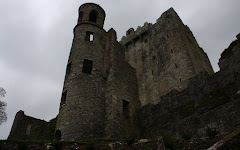
Blarney Castle

Atop the Rock of Cashel


Me in the stocks at Trim Castle
Sunday, May 15, 2011
Ireland, part 1
Ireland is my pretend home. New Zealand and Hawaii seriously contend for that apellation, especially when I'm compassing their range, but Ireland inspired the concept and sojourns always in the realm of my yearning.
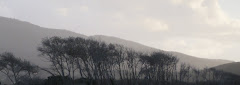
Ireland broods--sea, sky, and landscape. Lush greens surrender to rocky, windswept heath and hills. Clouds from purest white to deepest gray both race and lumber across a panorama of crystalline sky to cast any day in a new pattern of changeable light. The sea--ever beautiful, always charismatic--has oftentimes shed any inviting tropical shimmer and usually glints steely-cool, commanding respect, invoking awe. The moody teen (at least, according to my siblings) has given way to a woman who broods, and perhaps the Irish setting speaks to that facet of me.


Ireland broods--sea, sky, and landscape. Lush greens surrender to rocky, windswept heath and hills. Clouds from purest white to deepest gray both race and lumber across a panorama of crystalline sky to cast any day in a new pattern of changeable light. The sea--ever beautiful, always charismatic--has oftentimes shed any inviting tropical shimmer and usually glints steely-cool, commanding respect, invoking awe. The moody teen (at least, according to my siblings) has given way to a woman who broods, and perhaps the Irish setting speaks to that facet of me.


Saturday, May 7, 2011
Yellow Dust
In Korea the dust of pressing concern comes in yellow. Call it yellow dust, yellow sand, yellow wind—it is one and the same. Although it can impact Korea at any time, spring is prime time. February through May designate the official season, with April and early May holding historic honors for the most critical manifestations.
The dust originates in the deserts of Mongolia, northern China, and Kazakhastan where high-speed surface winds and intense dust storms kick up dense clouds of fine, dry soil particles. These clouds are then carried eastward by prevailing winds. In the last decade or so, it has become a serious problem due to the increase of industrial pollutants contained in the dust, to include heavy metals, in combination with the increasing desertification in China that causes longer and more frequent occurrences. China, Korea, and Japan regularly experience the brunt of yellow dust. Indeed, most of Southeast Asia has experienced its impact at one time or another. On occasion yellow dust has even been observed in the western USA, having traversed the entire Pacific Ocean.
The military website here in Korea provides the following suggestions to help diminish the negative health effects of yellow dust:
Since my arrival in Korea last August, I have heard all manner of horror tales regarding the yellow dust. “Just wait until spring,” various sorts intoned. (Apparently the spring of 2010 was one of the worst yellow dust seasons ever recorded.) Over the last nine months of living here in Seoul, there have certainly been days I’ve observed a jaundiced hue to the skies overhead, but would that be the dreaded “yellow dust” or the smoggy haze of big city reality? On Monday when walking to school, I noted that the Korean guys in uniform (I can never decide if they are military or police) patrolling outside the gate to the garrison wore masks. Knowing they spend goodly chunks of time outside, I suspected air quality might not be too good. At school several students mentioned how dry their throats were due to the yellow dust and a couple were in full out sneeze and snot mode. Sure enough, when I checked on a military website, on May 1, there was a “yellow dust alert.” Air quality must have improved, though, because students still went outside at lunch, and no Korean kids were sporting masks on the streets of Seoul!
Still, this week I have spent some of my down minutes researching yellow dust on the Internet . . .
The dust originates in the deserts of Mongolia, northern China, and Kazakhastan where high-speed surface winds and intense dust storms kick up dense clouds of fine, dry soil particles. These clouds are then carried eastward by prevailing winds. In the last decade or so, it has become a serious problem due to the increase of industrial pollutants contained in the dust, to include heavy metals, in combination with the increasing desertification in China that causes longer and more frequent occurrences. China, Korea, and Japan regularly experience the brunt of yellow dust. Indeed, most of Southeast Asia has experienced its impact at one time or another. On occasion yellow dust has even been observed in the western USA, having traversed the entire Pacific Ocean.
And for Korea specifically:
- The annual "yellow dust" spring storms that originate in China's Gobi Desert before sweeping south to envelop the Korean peninsula and parts of Japan, are blamed for scores of deaths and billions of dollars in damage every year in South Korea.
- The sand storms have been increasing in frequency and toxicity over the years because of China's rapid economic growth and have added to increased tensions with both South Korea and Japan over recent years.
- The state-sponsored Korea Environment Institute said the dust kills up to 165 South Koreans a year, mostly the elderly or those with respiratory ailments, and makes as many as 1.8 million ill. Annual economic damage to South Korea from the storms is estimated at up to 5.5 trillion won ($5.82 billion), according to the institute.
- Medical officials long have warned that the dust particles, measuring one to 10 microns, aggravate bronchitis and cause pinkeye, sinusitis and ear infections. New studies have shown the dust also can cause respiratory problems, and high particulate air-pollution levels have been linked to higher mortality rates. A recent study by South Korean, Chinese and Mongolian researchers — conducted amid concerns about the dust storms — showed children living in Inner Mongolia have less lung capacity than children living on South Korea’s Jeju Island.
- About half of the air pollutants in the atmosphere in Korea at any time are carried in from China.
- Some activists have long urged the government to verify the pollutants blowing in from China and to ask Beijing to take remedial action. The authorities have delayed the release of reports on how air pollutants from China affect Korea and Japan, and a ministry official said the cautious stance was taken out of concern over a possible diplomatic conflict caused by the report.
With international pressure and support, China has taken steps to plant trees in desert areas and claim they have 12 billion trees already planted. In 2007, South Korea sent several thousand trees in an effort to help mitigate the impact of yellow dust. China received the trees but stated that they would decide where the trees would be planted. Evidently, these trees were largely planted along highways.
The military website here in Korea provides the following suggestions to help diminish the negative health effects of yellow dust:
- Avoid outdoor activities, especially for the elderly, young children and those with asthma or other airway diseases.
- Keep windows and doors closed.
- Remove contact lenses and wear glasses.
- Brush your teeth and wash your hands, face and eyes with warm water upon returning indoors.
- Drink plenty of water to keep your tears flowing.
- Use air filters to keep air cleaner and humidifier to increase humidity levels.
- Wash dust off fruit and vegetables before consuming.
- Wash hands before preparing food.
Generally, when I arrive home after school now—whether or not I walked or drove for the commute—I wash my hands and wipe my face, especially the eye area, with one of those facial cleansing towelettes. That alleviates the minor issues I’ve had with itchy, burning eyes for the rest of the evening anyway!
The first known record of an Asian Dust event in Korea was in 174 AD. Then the dust was known as "Uto (우토, 雨土)", meaning “Raining Sands,” and was believed to be the result of an angry god sending down dust instead of rain or snow. I tell you what, all the rain in Seoul is “Uto”! I have a black car, and there has never been any form of precipitation—rain, sleet, or snow—during my residence in Seoul that has not rendered my car muddy!
Saturday, March 26, 2011
Fear, Power, Selfishness, and "Beloved Countries"
“Cry, the beloved country, for the unborn child that is the inheritor of our fear.”
—Alan Paton
Throughout my growing up years, my mother sporadically suggested books I might want to read. Usually I think I asked for ideas, but occasionally she would just bring me a book in her pile from one of her regular forays to the library. When I was in high school, she recommended that I read Alan Paton’s Cry, the Beloved Country. I liked the book then and, as an adult, have always kept a paperback copy in my own library. Last spring, though, I saw a movie version of the book and decided I wanted to read it cover to cover again. This time I was swept away! I loved it!
A writer, educator, devout Christian, and impassioned citizen of South Africa, Alan Paton wove all these strands of his being, history, and experience into the backdrop of his novel, and his lyrical style, allusions, and themes often invoke The Bible, particularly the King James translation. Although the novel is specifically a story about South Africa (first published in 1948, the same year apartheid became the law of the land), like any good literature it transcends the specifics of setting and character, becoming one of much grander scope—a true story of the human condition.
As I read the book this most recent time, I certainly envisioned the relevance of the story for South Africa, yet I also realized that the “beloved country” of the title is not limited to South Africa. So many of the dilemmas unfolded and questioned in the novel are dilemmas and questions confronted by my own “beloved country.” For the most part, I have not been happy—or even comfortable—with the direction the politics of immigration is currently moving in the USA. I believe too much of it is shaped by both fear and selfishness cloaked in a self-righteous mantle of philosophical faux-justice. Operating in a very human mode, we tend to be afraid of what is different, unfamiliar, or threatening to jostle our comfort zone, most particularly in how a new entity might impact power and resources, personally and collectively. Maybe because immigration issues seem to stem from “threats” visualized in similar fashion to those visualized by many in the white society of twentieth century South Africa, I found my own thoughts returning repeatedly to the immigration/assimilation situations in the USA as I read and underlined and marked up the margins of my copy of the book.
Here are some of my marked quotes to ponder from Cry, the Beloved Country regarding how we live our lives and how we try to structure our “beloved countries” :
[Perspective of one in “white society”]
“Who knows how we shall fashion such a land? For we fear not only the loss of our possessions, but the loss of our superiority…. Is it not better to hold what we have, and to pay the price of it with fear?...
“We do not know, we do not know. We shall live from day to day, and put more locks on the doors, and get a fine fierce dog when the fine fierce bitch next door has pups, and hold on to our handbags more tenaciously; and the beauty of the trees by night, and the raptures of lovers under the stars, these things we shall forego…. We shall be careful, and knock this off our lives, and knock that off our lives, and hedge ourselves about with safety and precaution. And our lives will shrink, but they shall be the lives of superior beings…. And the conscience shall be thrust down; the light and life shall not be extinguished, but be put under a bushel, to be preserved for a generation that will live by it again, in some day not yet come; and how it will come, and when it will come, we shall not think about at all.”
[Msimangu, a black priest]
“Because the white man has power, we too want power. But when a black man gets power, when he gets money, he is a great man if he is not corrupted. I have seen it often. He seeks power and money to put right what is wrong, and when he gets them, why he enjoys the power and money. Now he can gratify his lusts,…. Some of us think when we have power, we shall revenge ourselves on the white man who has had the power, and because our desire is corrupt, we are corrupted, and the power has no heart in it. But most white men do not know this about power, and they are afraid lest we get it.
“…But there is only one thing that has power completely, and that is love. Because when a man loves, he seeks no power, and then he has power….
"I have one great fear in my heart, that one day when they are turned to loving; they will find that we are turned to hating."
[Arthur Jarvis—son of James Jarvis, a white land owner]
“The truth is that our Christian civilization is riddled through and through with dilemma. We believe in the brotherhood of man, but we do not want it in South Africa. We believe that God endows men with diverse gifts, and that human life depends for its fullness on their employment and enjoyment, but we are afraid to explore this belief too deeply. We believe in help for the underdog, but we want him to stay under….
"The truth is, our civilization is not Christian; it is a tragic compound of great ideal and fearful practice, of loving charity and fearful clutching of possessions.”
[These are some other quotes in the book I liked and marked.]
“You ask yourself not if this or that is expedient, but if it is right.”
"It is not permissible to add to one's possessions if these things can only be done at the cost of other men. Such development has only one true name, and that is exploitation."
“We are caught in the toils of our own selfishness.”
“There is only one way in which one can endure man's inhumanity to man and that is to try, in one's own life, to exemplify man's humanity to man.”
When I discuss immigration issues with others, often the idea of fairness arises. I do believe in justice, yet I also do not believe we fully understand how to balance justice with mercy. Hence, I shall conclude this post with another quote, this time from Archibald MacLeish’s play J.B., a retelling of the Book of Job:
“You wanted justice, didn’t you. There isn’t any. There is only love.”
—Alan Paton
Throughout my growing up years, my mother sporadically suggested books I might want to read. Usually I think I asked for ideas, but occasionally she would just bring me a book in her pile from one of her regular forays to the library. When I was in high school, she recommended that I read Alan Paton’s Cry, the Beloved Country. I liked the book then and, as an adult, have always kept a paperback copy in my own library. Last spring, though, I saw a movie version of the book and decided I wanted to read it cover to cover again. This time I was swept away! I loved it!
A writer, educator, devout Christian, and impassioned citizen of South Africa, Alan Paton wove all these strands of his being, history, and experience into the backdrop of his novel, and his lyrical style, allusions, and themes often invoke The Bible, particularly the King James translation. Although the novel is specifically a story about South Africa (first published in 1948, the same year apartheid became the law of the land), like any good literature it transcends the specifics of setting and character, becoming one of much grander scope—a true story of the human condition.
As I read the book this most recent time, I certainly envisioned the relevance of the story for South Africa, yet I also realized that the “beloved country” of the title is not limited to South Africa. So many of the dilemmas unfolded and questioned in the novel are dilemmas and questions confronted by my own “beloved country.” For the most part, I have not been happy—or even comfortable—with the direction the politics of immigration is currently moving in the USA. I believe too much of it is shaped by both fear and selfishness cloaked in a self-righteous mantle of philosophical faux-justice. Operating in a very human mode, we tend to be afraid of what is different, unfamiliar, or threatening to jostle our comfort zone, most particularly in how a new entity might impact power and resources, personally and collectively. Maybe because immigration issues seem to stem from “threats” visualized in similar fashion to those visualized by many in the white society of twentieth century South Africa, I found my own thoughts returning repeatedly to the immigration/assimilation situations in the USA as I read and underlined and marked up the margins of my copy of the book.
Here are some of my marked quotes to ponder from Cry, the Beloved Country regarding how we live our lives and how we try to structure our “beloved countries” :
[Perspective of one in “white society”]
“Who knows how we shall fashion such a land? For we fear not only the loss of our possessions, but the loss of our superiority…. Is it not better to hold what we have, and to pay the price of it with fear?...
“We do not know, we do not know. We shall live from day to day, and put more locks on the doors, and get a fine fierce dog when the fine fierce bitch next door has pups, and hold on to our handbags more tenaciously; and the beauty of the trees by night, and the raptures of lovers under the stars, these things we shall forego…. We shall be careful, and knock this off our lives, and knock that off our lives, and hedge ourselves about with safety and precaution. And our lives will shrink, but they shall be the lives of superior beings…. And the conscience shall be thrust down; the light and life shall not be extinguished, but be put under a bushel, to be preserved for a generation that will live by it again, in some day not yet come; and how it will come, and when it will come, we shall not think about at all.”
[Msimangu, a black priest]
“Because the white man has power, we too want power. But when a black man gets power, when he gets money, he is a great man if he is not corrupted. I have seen it often. He seeks power and money to put right what is wrong, and when he gets them, why he enjoys the power and money. Now he can gratify his lusts,…. Some of us think when we have power, we shall revenge ourselves on the white man who has had the power, and because our desire is corrupt, we are corrupted, and the power has no heart in it. But most white men do not know this about power, and they are afraid lest we get it.
“…But there is only one thing that has power completely, and that is love. Because when a man loves, he seeks no power, and then he has power….
"I have one great fear in my heart, that one day when they are turned to loving; they will find that we are turned to hating."
[Arthur Jarvis—son of James Jarvis, a white land owner]
“The truth is that our Christian civilization is riddled through and through with dilemma. We believe in the brotherhood of man, but we do not want it in South Africa. We believe that God endows men with diverse gifts, and that human life depends for its fullness on their employment and enjoyment, but we are afraid to explore this belief too deeply. We believe in help for the underdog, but we want him to stay under….
"The truth is, our civilization is not Christian; it is a tragic compound of great ideal and fearful practice, of loving charity and fearful clutching of possessions.”
[These are some other quotes in the book I liked and marked.]
“You ask yourself not if this or that is expedient, but if it is right.”
"It is not permissible to add to one's possessions if these things can only be done at the cost of other men. Such development has only one true name, and that is exploitation."
“We are caught in the toils of our own selfishness.”
“There is only one way in which one can endure man's inhumanity to man and that is to try, in one's own life, to exemplify man's humanity to man.”
When I discuss immigration issues with others, often the idea of fairness arises. I do believe in justice, yet I also do not believe we fully understand how to balance justice with mercy. Hence, I shall conclude this post with another quote, this time from Archibald MacLeish’s play J.B., a retelling of the Book of Job:
“You wanted justice, didn’t you. There isn’t any. There is only love.”
Saturday, March 5, 2011
Shanghai and Environs, Briefly Noted
Shanghai is a study in contrasts. The emerging China--the one already on the entire planet's speed dial, the one engaged in final preening before assuming the number one position of its avidly pursued aspirations--stands side by side with the remnants of the mess and poverty wrought by harshly imposed communism and a tragic interval of cultural revolution, as well as with the faded, yet aesthetically moving, vignettes remaining from previous glory days in history. When I taught English in China for six weeks in the summer of 2004, high school students asked me more than once where I'd most like to live in China. Pleading a very real lack of knowledge and experience, I would always return the question to them and ask where they would suggest. For preferred cities, Shanghai always ranked on top. Based on my February visit, that opinion certainly merits my assent.
This is Shanghai:


And this is Shangai:


And this is Shanghai:


NOTE: Over 22 million people currently live in Shanghai.
This is Shanghai:


And this is Shangai:


And this is Shanghai:


NOTE: Over 22 million people currently live in Shanghai.
Subscribe to:
Posts (Atom)